

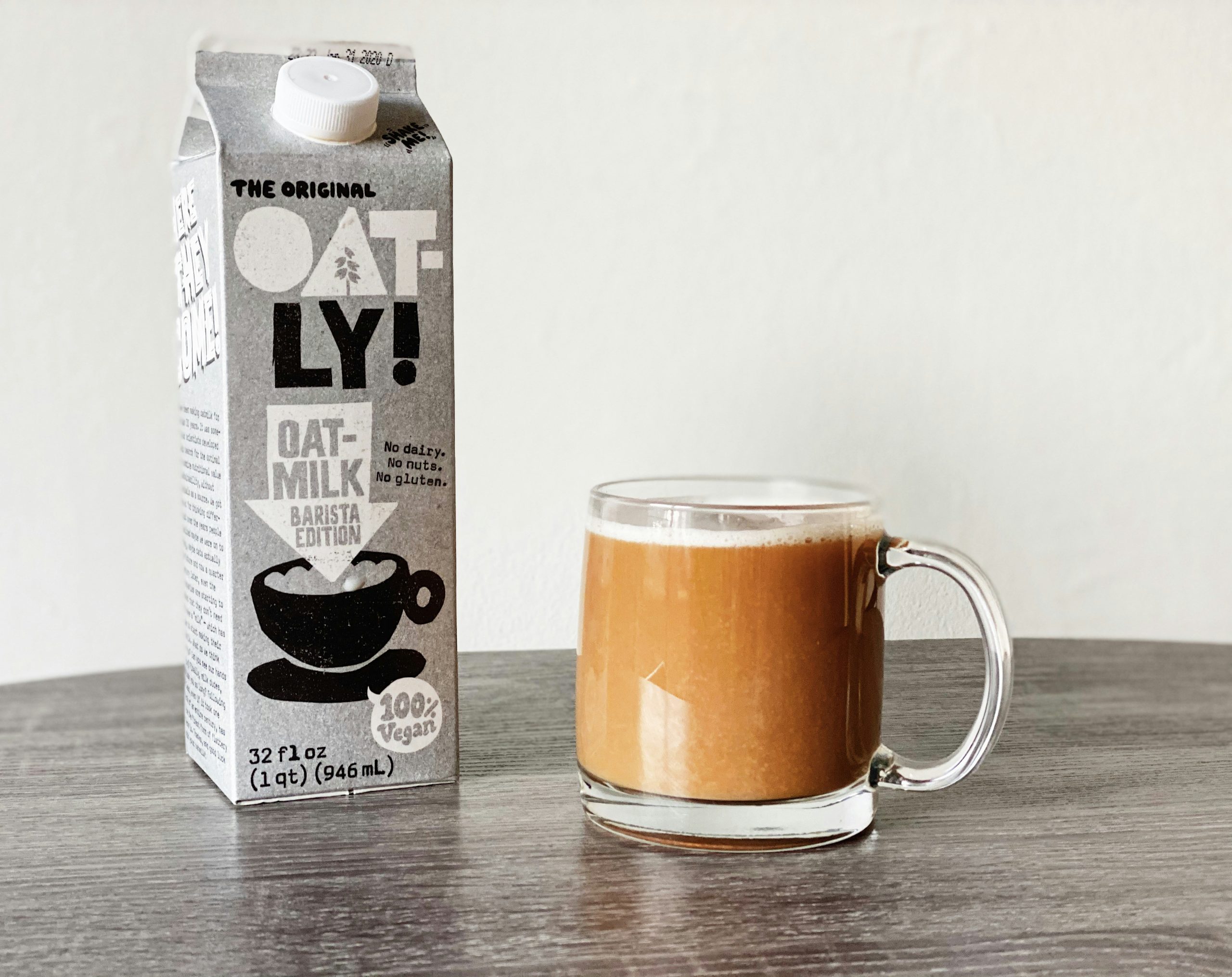
Is oat milk bad for you? A calm, practical look at energy and blood sugar
If you spend any time online, you’d be forgiven for thinking oat milk is single‑handedly responsible for blood sugar spikes, low energy, and half the problems people experience in midlife.
In practice, this is one of those nutrition questions I hear all the time from clients — and the answer is far less dramatic than social media makes it sound.
Here’s the short version: oat milk itself isn’t usually the issue. What matters much more is how it fits into the rest of your day.
This article looks at what’s actually in oat milk, where the blood sugar concerns come from, and why for many midlife adults there are bigger levers to pull when it comes to energy.
What is oat milk, nutritionally?
Most oat milks are made from:
water
oats
a small amount of oil
added vitamins and minerals (often calcium, iodine, and B vitamins)
From a nutrition perspective, oat milk is mostly carbohydrate and low in protein. That doesn’t make it unhealthy — but it does explain why it doesn’t offer much staying power on its own.
Many shop‑bought oat milks are fortified, which can be helpful. In the UK, fortification with calcium and iodine is particularly relevant, as these are nutrients some adults don’t consistently get enough of.
The key point: oat milk is a food ingredient, not a meal.
Why do people worry about oat milk and blood sugar?
The concern usually comes from two places:
Oats are a source of carbohydrate
Oat milk contains very little protein
Carbohydrates can raise blood glucose and that’s normal physiology, not a problem in itself. What influences the size and speed of that rise is context:
portion size
what else is eaten at the same time
whether protein, fibre, or fat are present
A splash of oat milk in coffee behaves very differently in the body than relying on oat milk while skipping meals or running on caffeine all morning.
Blood sugar response is shaped by the whole pattern, not one ingredient.
Is oat milk bad for energy?
For most people, oat milk isn’t what’s causing energy crashes.
What I see far more often in midlife adults is:
under‑eating earlier in the day
long gaps between meals
meals built mostly around carbohydrates with very little protein
In that context, oat milk often gets blamed simply because it’s visible and easy to point at.
But low energy usually reflects missing energy anchors, like meals that provide enough protein, fibre, and overall fuel to support steady concentration and mood.
When oat milk might not be helping?
Oat milk may be less supportive if:
it’s being used as a main source of “fuel”
meals are regularly skipped
breakfast or lunch lacks protein
energy already feels unstable
In these situations, the issue isn’t that oat milk is “bad”, but that something important is missing elsewhere.
A more useful question to ask
Instead of:
Is oat milk bad for you?
A better question is:
Does this help me feel steady and focused until my next meal?
That shift alone removes a lot of unnecessary food anxiety — and points attention towards the things that actually move the needle.
What to focus on instead (especially in midlife)
For many adults in their 40s and 50s, energy improves when they prioritise:
regular meals
adequate protein earlier in the day
fibre from whole foods
enough total intake (not just “eating well”)
These factors have a far bigger impact on blood sugar stability and energy than cutting out one specific food.
If this question sounds familiar
Questions like this come up constantly in my client sessions. Not because people are doing anything wrong — but because nutrition advice online often focuses on single foods instead of real‑life patterns.
If you want a simple way to zoom out and see where your own energy support might be missing, start with the Energy Check‑In. It’s a short, practical tool designed to highlight gaps without tracking or cutting foods.
If you’d prefer personalised support, you can also book a 1:1 session and we’ll work through this properly together.
Because better energy rarely comes from removing oat milk — it comes from building a more supportive day overall.